
Coverlet vs Bedspread: A Complete Comparison Guide
Coverlets and bedspreads are both thin, decorative top layers, which is why they are so often confused. The difference is coverage. A bedspread is sized to the bed rather than the mattress, dropping to the floor and usually over the pillows as well. A coverlet sits on the mattress top and stops partway down the sides.
Everything else follows from that. How much of the bed you see, how formal the room reads, whether the layers underneath are part of the look or hidden beneath one piece of fabric. Neither is more correct, but they produce very different beds.
Coverlet vs Bedspread: A Quick Comparison
Here is how a coverlet and a bedspread compare across the things that matter once the bed is made. The differences are small on paper and obvious in a bedroom.
| Feature | Coverlet | Bedspread |
|---|---|---|
| Coverage | Mattress top, drops partway down the sides | Full drop to the floor, often over the pillows |
| Bed look | Layered, tailored, frame and valance visible | Single sweep of fabric, base concealed |
| Layering | Designed to sit over sheets and blankets | Usually the only visible layer |
| Formality | Relaxed and contemporary | Traditional and more formal |
| Care | Standard wash, quick to dry, folds small | Larger to wash, slower to dry, bulkier to store |
| Best for | Beds worth showing, seasonal layering | Hiding a plain base, a classic bedroom look |
What Is a Coverlet Best For?
A coverlet finishes a bed without covering it up. It gives the top of the mattress texture and colour while leaving the frame, the valance and the sheets folded back at the head all visible, so the bed reads as something built rather than something draped.
Coverage and Fit
Mattress-sized is the whole idea. A coverlet reaches across the top and drops a little way down each side, usually stopping well above the floor and short of the pillows. Nothing is hidden that you wanted to see.
That fit is also what makes it easy to live with. Less fabric means a standard wash cycle, a quick dry, and a piece that folds down small enough for a linen cupboard rather than a blanket box.
Styling and Layering
Layers are the point. A coverlet is built to sit over sheets, a quilt cover or a blanket, adding a finishing texture without smothering what is underneath. Fold the top third down and the whole stack becomes part of the look.
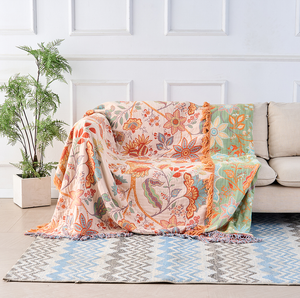
Casa & Beyond's coverlet collection runs from reversible and cotton gauze through to floral, patchwork, embroidered and minimalist styles, which makes it straightforward to match the top layer to the room rather than treating it as purely functional. In warmer months it can be the only layer on the bed. In cooler ones it goes over a blanket, and the bed adjusts without being restyled.

What Is a Bedspread Best For?
A bedspread covers the bed completely, floor to pillows, in a single piece of fabric. It is the older approach to a made bed, and it solves a specific problem: a bed that looks better hidden than shown.
Coverage and Fit
Sized to the bed, not the mattress. A bedspread drops the full height of the base and frame, tucking over or around the pillows at the head, so the finished bed reads as one continuous surface from floor to headboard.
All that fabric asks something in return. A bedspread is larger to wash, slower to dry, and needs real cupboard space out of season, where a coverlet folds away with the sheets.
Styling and Layering
Concealment is the effect. A bedspread hides a divan base, a mismatched frame or a bed that has seen better decades, and it gives the room the formal, symmetrical look associated with hotels, guest rooms and traditional interiors.
The trade-off is everything a coverlet does. Layering underneath becomes pointless, since none of it shows. Restyling the bed with the seasons means removing the bedspread entirely rather than adding to it. And in a bedroom where the frame is worth looking at, hiding it is a strange choice.
Which One Suits Your Bedroom?
The right answer depends on your bed, your bedroom and how much of it you want on display. Neither piece is a compromise, they are just built for different rooms.
Choose a coverlet if
-
The bed frame or base is worth showing
-
Layers change as the seasons do
-
The room leans contemporary rather than formal
-
Folding, washing and storing should be easy
-
The bed is part of the room's styling
Choose a bedspread if
-
A divan base or plain frame needs covering
-
The bedroom suits a traditional, formal look
-
Bedding underneath needs protecting from dust or sunlight
-
One piece should do the whole job
-
The bed is rarely used or rarely restyle
For most bedrooms, the coverlet is the more useful piece. Beds are better looking than they used to be, and a layer that shows the frame, the valance and the sheets underneath does more for a room than one that covers all three.

Final Thoughts
A bedspread treats the bed as something to be tidied away. A coverlet treats it as something to be finished. That is the whole difference, and it explains why bedspreads have quietly disappeared from most contemporary bedrooms while coverlets have not.
Practicality reinforces it. A coverlet washes in a domestic machine, dries in an afternoon, folds into the linen cupboard, and adapts as the weather turns rather than committing the bed to one look all year. A bedspread trades all of that for coverage and protection, which is a fair deal in a guest room and a poor one in the room you sleep in.
Casa & Beyond's coverlets are designed for exactly this, a lightweight, styled layer that adds texture and warmth while leaving the bed visible underneath. If you are refreshing the whole thing, the wider bedroom collection covers the quilt covers, blankets and soft layers that sit beneath it.


